
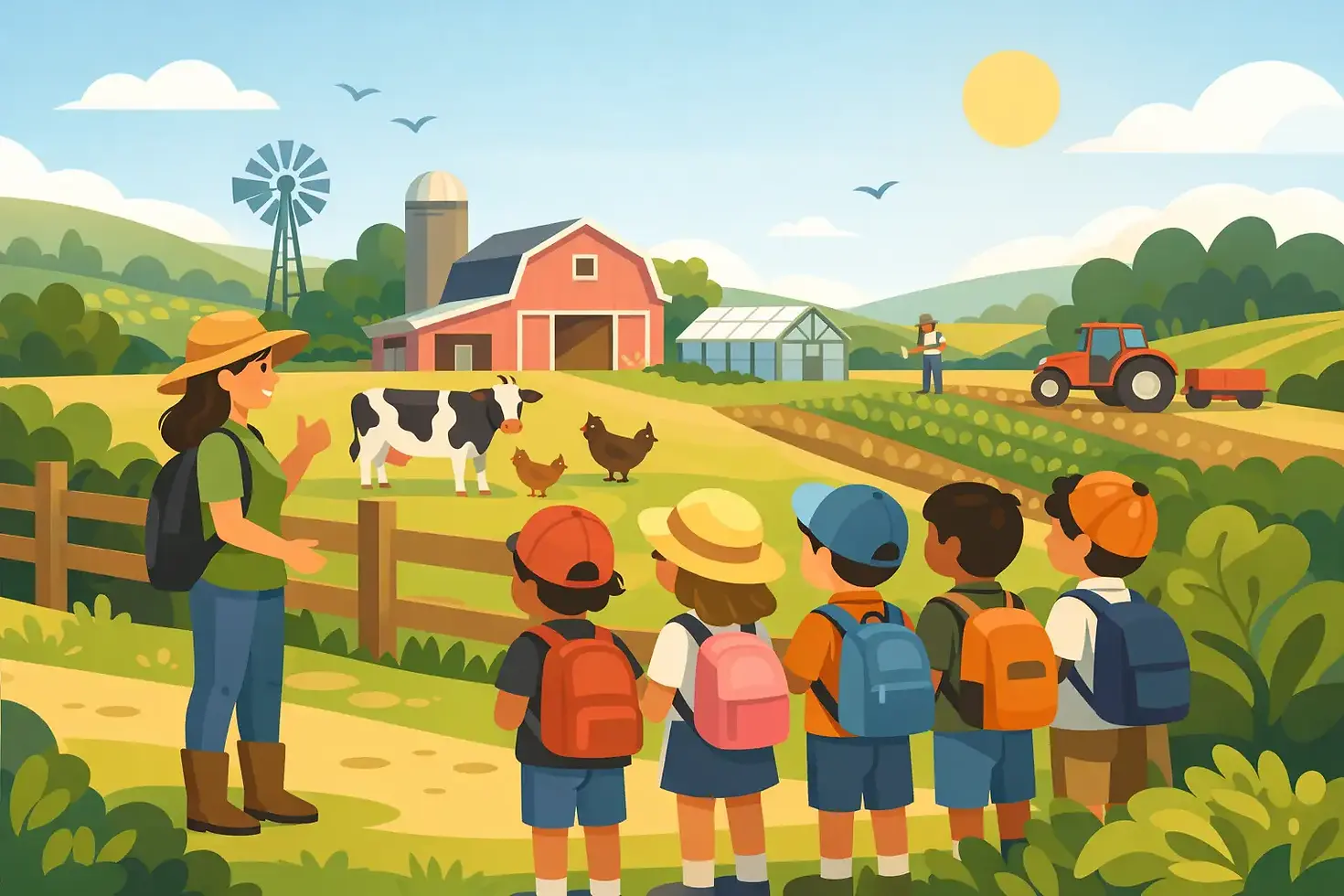
How to Plan a Farm Field Trip Kids Remember

A good farm field trip is not measured by how many animals children see. It is measured by the moment a student who has only known food from a grocery shelf realizes that eggs, wool, milk, gardens, weather, and animal care are all connected. Knowing how to plan a farm field trip helps you make room for those moments while keeping the day calm, safe, and useful for teachers, chaperones, and children.
A farm is a busy, living classroom. Animals have routines, the ground may be uneven, little hands need washing, and a sudden spring shower can change the plan. A little preparation lets everyone enjoy the good parts: friendly critters, fresh air, curious questions, and time together outside.
Start With One Clear Learning Goal
Before you choose a date or reserve a bus, decide what you want students to learn. Trying to cover every part of farm life in one visit can leave children overstimulated and adults scrambling to keep up. A simple goal gives the day a purpose.
For younger students, the goal might be identifying what animals need to live: food, water, shelter, space, and gentle care. Elementary groups may focus on animal life cycles, food systems, habitats, or the difference between wild and domesticated animals. Older students can look more closely at agriculture, conservation, animal breeds, land use, or the work involved in running a farm.
Share that goal with the farm when you inquire. A guided visit is stronger when the host knows whether your class is studying science standards, reading a farm-themed book, or simply building confidence around animals. The best activities are hands-on, but they should still connect to what students are learning back at school.
Choose a Farm That Fits Your Group
Not every farm experience is right for every age group. Some farms are designed mostly for quick weekend visits, while others can accommodate school groups with guided animal interaction, restrooms, shade, seating, and space for lunch. Ask what is included in the visit and how much of the experience is guided.
For young children, a smaller setting often works better than a packed attraction. They need room to pause, listen, and take in what they see. A farm with a variety of approachable animals can help students notice differences in size, feathers, fur, sounds, and behavior without rushing from one activity to the next.
At Thornfield Heritage Farm, for example, a guided visit can introduce students to Nigerian Dwarf goats, kunekune pigs, Valais sheep and lambs, heritage waterfowl, and giant rabbits in the fenced orchard enclosure. These animals offer plenty to see, hear, and talk about. The farm's Great Pyrenees are livestock guardian dogs, not guard dogs, and their gentle nature is a useful starting point for discussing how different animals have different jobs.
When comparing locations, ask practical questions early:
What ages and group sizes can the farm host comfortably?
How long does the visit last, and what happens during that time?
Are there covered areas, picnic tables, restrooms, and a weather plan?
Is the property accessible for guests with mobility, sensory, medical, or dietary needs?
What are the rules for feeding, touching, and photographing animals?
A clear answer to these questions is more valuable than a long list of attractions.
Pick a Date With Weather and Energy in Mind
Farm days are best when students are ready to move, observe, and listen. For most school groups, a morning arrival works well. Children tend to have more energy, temperatures are often milder, and there is time to eat lunch before returning to school.
Spring and fall are popular for good reason, but popularity can mean limited availability. Reserve early if your school has a narrow window. Summer visits can be fun for camps and family groups, though shade, water breaks, and heat plans become more important. Winter can offer quieter visits and different learning opportunities, but ask what animal areas and activities are available in colder or wet weather.
Do not promise a perfect weather day. Instead, prepare families and chaperones for the real farm experience. Closed-toe shoes, clothes that can get dusty, layers, sunscreen, bug spray if appropriate, and rain gear when the forecast calls for it are sensible choices. A farm visit should feel relaxed, not fussy, but flip-flops and brand-new white outfits can make a long day harder than it needs to be.
Build a Simple Schedule, Not a Packed One
Children need more time than adults expect. Getting off a bus, using the restroom, gathering a group, and settling into a safety talk all take time. Leave breathing room between activities so the schedule does not fall apart after the first delay.
A solid field trip usually includes arrival and orientation, a guided animal experience, time for questions, a snack or lunch break, and one quieter activity before departure. That quieter activity might be a short reflection, a sketching session, or a chance to name one new thing each student learned.
Avoid scheduling every minute. A child watching a duck splash in water or listening to a goat chew may be learning just as much as a child answering a worksheet question. Farms are full of small observations that cannot be rushed.
Plan Chaperones by Group, Not Just by Head Count
Bring enough adults to keep small groups together without turning the visit into a parade of grown-ups calling out directions. Younger children need closer supervision, especially near gates, animals, water, and uneven ground. Assign chaperones in advance and give each one a small group of students to watch throughout the day.
Send chaperones a short note before the trip. Include the schedule, what to wear, the farm's animal rules, the meeting point, and a reminder that their job is to help children participate. Chaperones who are chatting on the sidelines can miss the moment a student needs help, reassurance, or a handwashing reminder.
Teach Animal Etiquette Before You Arrive
The best animal interactions begin before the bus leaves school. Spend a few minutes explaining that animals are not toys and that being gentle is part of being a good guest. Children usually rise to the occasion when expectations are clear.
Practice the basics: walk instead of run, use quiet voices near animals, listen to the guide, keep fingers away from animal mouths unless invited, and ask before touching. Explain that an animal may choose not to come close, and that is okay. Watching respectfully is still a meaningful interaction.
Handwashing deserves the same attention as the animal visit itself. Plan for it after touching animals and before eating. Bring hand sanitizer for transitions if needed, but follow the farm's instructions about where soap-and-water handwashing is available.
This conversation also helps students who are nervous around animals. Let them know they do not have to pet every animal. A child can stand back, observe, and still be fully part of the group. Choice makes the experience more welcoming for everyone.
Handle Permissions, Food, and Accessibility Early
Field trip paperwork is not glamorous, but it prevents last-minute trouble. Send permission forms with the date, departure and return times, cost, clothing guidance, lunch details, and a clear description of animal contact. Include emergency contact information and any school-required medical forms.
Ask families to share allergies, mobility needs, sensory concerns, medication requirements, and food restrictions by the deadline. Then speak directly with the farm and school staff about accommodations. It may be as simple as arranging a quieter place for a break, ensuring a student can stay on firm ground, or adjusting the pace of a group.
For food, decide whether students will bring bag lunches, receive school lunches, or eat after returning to campus. Confirm where food may be eaten and whether there are picnic tables or covered areas. Keep snacks simple, especially when little hands have been exploring a farm.
Give the Visit a Life After the Bus Ride Home
A field trip should not end with a sleepy bus ride and a stack of forgotten permission slips. Give students a small way to carry the experience back into the classroom. Ask them to draw an animal and label what it needs. Have them write three observations using their senses. Let them compare a farm animal's role with that of a pet or research why heritage breeds matter.
For older students, a short reflection can lead to richer conversations: What surprised you? What job on the farm seemed harder than expected? How does caring for animals connect to caring for land and water? These questions turn a pleasant outing into learning that sticks.
A well-planned farm trip does not need fancy extras to be memorable. Give children time, clear guidance, and a chance to meet animals with curiosity and kindness. They may return to school with dusty shoes, full water bottles, and stories they cannot wait to tell.


Comments