
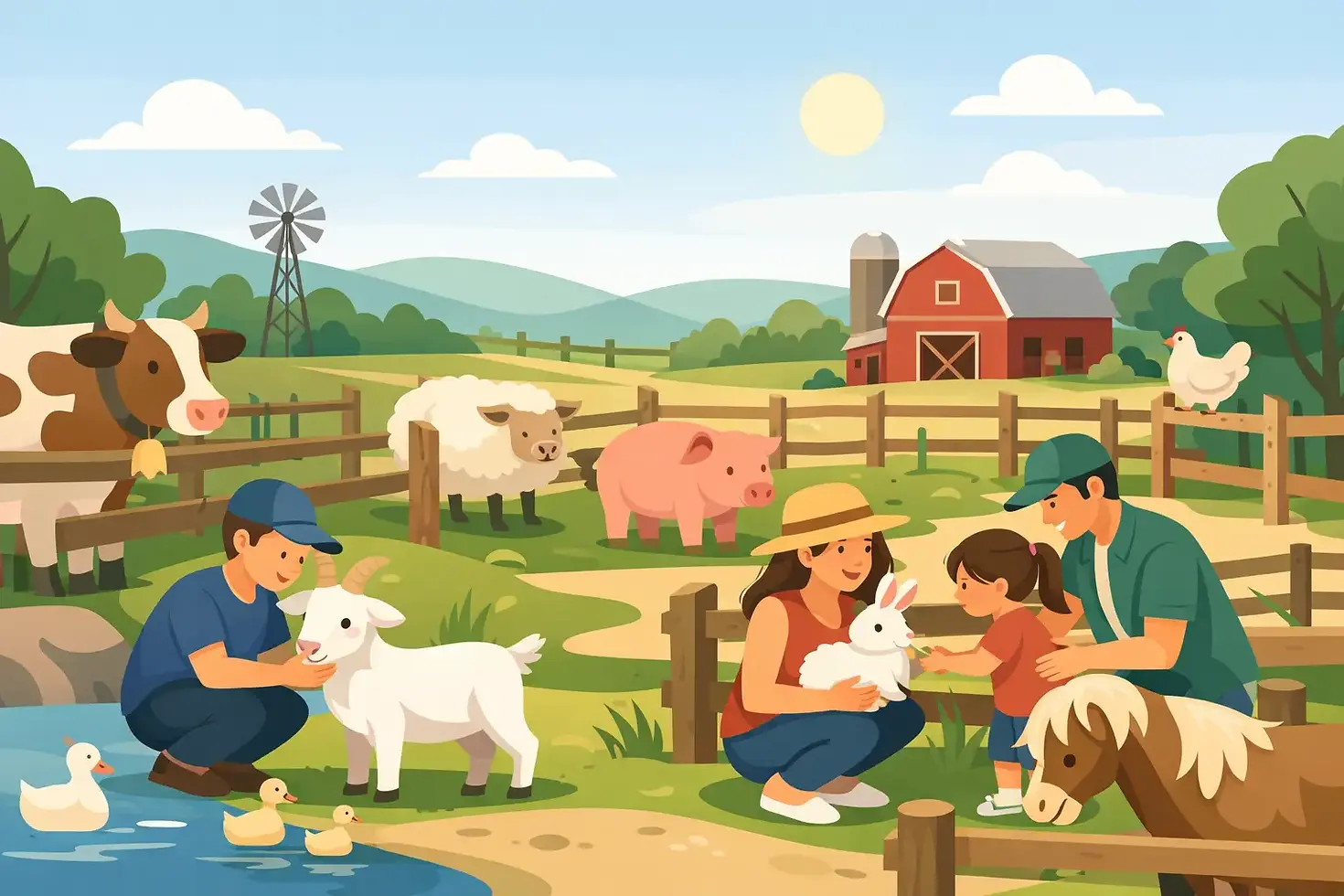
Petting Zoo Safety Guide for Happy Farm Days

A good farm visit often starts with a child spotting a goat, rabbit, or duck and asking to get closer. That excitement is exactly what makes animal time special. This petting zoo safety guide helps families keep those moments calm, kind, and comfortable for both children and animals.
At a hands-on farm, safety is not about making the experience feel stiff or complicated. It is about slowing down enough to notice what an animal is saying, following the farm's posted rules, and leaving room for curiosity without crowding the critters. A few simple habits make a big difference.
Start With the Farm's Rules
Every farm is set up a little differently. Some animals may be available for gentle petting, while others are best enjoyed from the other side of a fence. Young animals, nesting birds, animals eating a meal, or a livestock guardian dog at work may need extra space.
Read the signs, listen to staff, and ask if you are unsure. Farm teams know each animal's routine and personality. If they say an enclosure is closed or an animal needs a quiet break, that is not a missed opportunity. It is part of good animal care.
Parents and teachers should set expectations before children enter an animal area: walk, use indoor voices, keep hands gentle, and stay where the grown-ups can see them. It only takes a minute, and it makes the visit easier for everyone.
Calm Hands Make Friendly Encounters
Animals do not understand excited squeals, quick hugs, or hands waving above their heads the way people do. A child who means well can still startle an animal by rushing up or grabbing at fur, feathers, ears, horns, or a tail.
The best approach is simple. Walk slowly, let the animal see you coming, and offer a gentle touch on its back or shoulder if staff says petting is welcome. Use one or two soft strokes, then give the animal room to move away. If it steps back, turns away, lowers its head, flaps, freezes, or seems unsettled, it is asking for space.
Toddlers may need a grown-up to guide their hand. That is perfectly normal. Little ones are still learning how to be gentle, and a close adult helps turn a quick animal hello into a positive lesson.
Avoid picking up animals unless a farm staff member invites you to do so. Rabbits, chicks, ducks, and other smaller animals can be injured if they wiggle free and fall. Even a very sweet animal may scratch or struggle when it feels insecure.
Give Animals Their Personal Space
Friendly does not mean always available. Farm animals need breaks from attention just like people do. Do not corner an animal, climb on fences, reach into a shelter, or crowd around a favorite critter with a group of friends.
This matters especially around mothers and babies. Baby animals are adorable, but they are also young and easily stressed. Their mothers may be protective, and farm staff may limit contact while babies grow stronger. A good rule for children is to look with happy eyes first, then wait for an invitation to touch.
Keep fingers away from animal mouths, even when an animal seems interested in a hand. Many animals investigate with their noses and mouths, and fingers can look a lot like treats. Never tease an animal with food or hold a snack through a fence.
Food Rules Protect Guests and Animals
One of the most common petting zoo mistakes is sharing people food with animals. Chips, cookies, sandwich scraps, gum, and sugary drinks may seem harmless, but they can upset an animal's digestion or create unsafe food habits.
Only offer feed provided or approved by the farm, and only in the areas where feeding is allowed. Use an open, flat hand if staff instructs guests to hand-feed. This keeps fingers out of the way and gives animals a clearer target.
Children should also finish their own snacks before entering animal areas, or keep food put away. An animal that smells crackers in a small hand may come closer than a child expects. Save picnic time for the tables and open gathering areas, where everyone can relax without competing with a curious goat or duck.
Handwashing Is Part of the Fun
The final stop after animal time should always be a handwashing station. Wash hands with soap and running water before eating, drinking, touching your face, getting back in the car, or handing a pacifier or bottle to a child.
Hand sanitizer can be useful when soap and water are not immediately available, but it does not replace a proper wash when sinks are nearby. Scrub with soap for about 20 seconds, including fingertips, thumbs, and under nails, then dry with a clean towel.
For families with babies and toddlers, bring a plan for clean hands before snacks. Wipes can help with a muddy face or a dusty stroller handle, but soap and water are still the best choice after animal contact. Keep pacifiers, sippy cups, and favorite comfort toys out of animal enclosures whenever possible.
Choose the Right Pace for Your Child
Not every child will want to pet an animal right away. Some are ready to walk into an enclosure with a big smile. Others would rather watch from outside the fence, ask questions, and warm up slowly. Both choices are good choices.
Let nervous children observe first. Point out the sounds animals make, the texture of wool or feathers, and the way animals move together. A child can have a meaningful farm experience without touching every animal. Forcing a hesitant child to participate can make the visit feel overwhelming.
The same goes for energetic children. If a child is running, yelling, or having trouble following directions, take a short break outside the animal area. A drink of water, a snack, or a few minutes in open space can reset the day. Then they can try again when their body is calmer.
Petting Zoo Safety Guide for Groups and Parties
Field trips, birthday parties, and family reunions bring extra excitement, which means adults need a simple plan. Before the group meets the animals, assign a few adults to watch different sections of the group rather than standing together in one spot. Smaller clusters of children are easier to guide and less likely to crowd an enclosure.
For school groups, teachers can review three reminders on the bus or before getting off: walking feet, gentle hands, and handwashing before lunch. Party hosts can do the same before the cake, games, or music begins. Children often rise to the occasion when expectations are clear and cheerful.
If someone gets a minor scratch, bite, or bump, let staff know right away. Clean the area promptly and follow the farm's guidance. Most animal encounters are wonderfully uneventful, but speaking up quickly helps staff support your group and check on the animal, too.
Dress for a Real Farm Day
Farm visits are more comfortable when guests expect a little dirt. Closed-toe shoes are usually the best choice for walking on uneven ground and around animals. Comfortable clothes that can handle dust, grass, or a little mud allow children to explore without worrying about every smudge.
Bring weather basics for the season: water, sunscreen, hats, light layers, or rain gear when needed. On warm days, take shade and hydration breaks. On chilly days, keep hands warm before expecting children to enjoy a slow animal interaction. Comfort helps everyone stay patient.
Strollers and wheelchairs can be helpful, but stay aware of gates, narrow paths, and animal feeding areas. If a path feels crowded, wait a moment rather than pushing through. A little patience keeps the space safer and more pleasant.
Help Children Learn, Not Just Touch
The best petting zoo visits give children more than a photo opportunity. Ask what they notice. Is the rabbit's fur soft or coarse? Why might a duck have webbed feet? What sound does a sheep make when it wants its flock nearby?
These small questions turn animal time into hands-on learning. They also help children focus on the animal as a living creature with needs, rather than a toy or a prop. That is a lesson they can carry home.
At Thornfield Heritage Farm, families can meet friendly farm animals while enjoying open space, gatherings, and a little country air close to Hillsborough. Come ready to listen, wash up, and let children take their time. The sweetest animal moments usually happen when nobody is in a hurry.


Comments